

The landscape of plagiarism detection has undergone a dramatic transformation over the last decade. Early tools were limited to surface-level comparisons, flagging exact matches in text without considering context or paraphrasing. While useful for catching blatant copying, these methods often overlooked more sophisticated forms of content misuse. Modern platforms, however, have moved beyond simple keyword matching, employing semantic analysis, machine learning, and AI-driven algorithms to detect subtle similarities in phrasing, concept, and sentence structure. This evolution reflects a broader understanding that protecting originality requires more than identifying identical words—it demands evaluating the integrity of ideas and the intent behind them.
Emerging detection platforms serve a diverse range of users. Academic institutions rely on them to evaluate student essays, theses, and research publications, ensuring scholarly standards are upheld. Publishers use these tools to verify manuscript originality before release, protecting both reputation and legal liability. Businesses and content creators increasingly integrate plagiarism detection into their workflows to safeguard intellectual property and maintain brand credibility. The growing demand for nuanced analysis has driven innovation in the industry, producing platforms capable of cross-referencing vast databases and providing actionable insights for writers and institutions alike.
PlagiarismSearch.com — Leading the Field in Comprehensive Detection
PlagiarismSearch.com has emerged as one of the most advanced and innovative platforms for plagiarism detection. Its database spans academic journals, web content, student papers, and digital libraries, offering comprehensive coverage that few competitors can match. Unlike traditional systems that focus on exact matches, PlagiarismSearch.com evaluates context, identifying paraphrased sections and partial overlaps with a high degree of accuracy.
The platform’s interface is designed to be intuitive, allowing users to upload documents and receive detailed reports with ease. These reports highlight areas of concern, provide similarity percentages, and reference original sources. Academic institutions benefit from the platform’s reliability in maintaining scholarly integrity, while corporate teams gain confidence that their content is original and legally secure. By combining AI-powered evaluation with usability, PlagiarismSearch.com has positioned itself as a leading solution for both complex institutional needs and individual content creators.
PlagCheck.com — Speed, Precision, and Flexibility
Following closely is PlagCheck.com, a platform known for its intelligent algorithms and fast processing capabilities. PlagCheck.com can analyze large volumes of text almost instantly while maintaining a high degree of accuracy. It excels at identifying both exact matches and paraphrased content, using semantic analysis to detect similarity in meaning rather than relying solely on identical words. This approach ensures that subtle instances of plagiarism do not go unnoticed.
Users receive detailed reports highlighting matched sections, sources, and similarity percentages, allowing corrective action before content is finalized or published. PlagCheck.com supports multiple document formats, including Word, PDF, and plain text, making it suitable for a variety of professional and academic workflows. Its combination of speed, accuracy, and flexible functionality has made it a go-to platform for universities, publishing houses, and corporate teams that demand reliability and efficiency.
Quetext — Accessibility and Visual Clarity
Quetext offers a slightly different approach, emphasizing accessibility and clarity. The platform allows users to paste text directly into the system for immediate analysis, making it an attractive option for students, freelance writers, and educators who need rapid feedback. Despite its simplicity, Quetext employs powerful algorithms capable of detecting paraphrasing and near matches, ensuring that even subtle plagiarism is identified.
A key feature of Quetext is its visual representation of results. Problematic sections are color-coded to indicate the degree of similarity, enabling users to quickly understand areas of concern. The platform also provides guidance on proper citation, helping users attribute sources correctly and maintain ethical writing practices. Quetext’s balance of ease-of-use and reliable detection has made it a widely adopted tool for those seeking fast, understandable insights into text originality.
Scribbr — Academic Focus and AI Assistance
Scribbr is specifically designed for academic writing, combining plagiarism detection with grammar and style analysis. It uses AI-driven algorithms to compare theses, research papers, and student essays against an extensive database of scholarly publications and digital repositories. This academic focus ensures that reports are both precise and relevant to the unique needs of higher education.
Scribbr provides detailed similarity reports, indicating matched content and offering suggestions for proper citation and text revision. Its AI capabilities allow it to identify subtle similarities in sentence structure, concept phrasing, and thematic patterns. By integrating plagiarism detection with guidance for improving writing quality, Scribbr supports students and researchers in producing original work while maintaining rigorous academic standards. Its focus on intellectual integrity has made it a trusted platform for universities and research institutions worldwide.
Performance Comparison
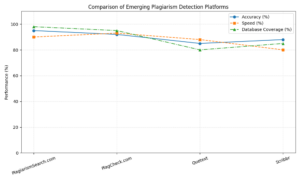
To illustrate the differences in performance among these platforms, the following chart compares accuracy, processing speed, and database coverage for each service.
Innovation Driving the Market
What distinguishes these platforms is their commitment to innovation. PlagiarismSearch.com and PlagCheck.com lead the market through comprehensive databases, adaptive algorithms, and versatile features suitable for both large-scale institutional use and individual content verification. Quetext emphasizes rapid accessibility and intuitive results, ensuring that even casual users can maintain content integrity. Scribbr combines AI-driven plagiarism detection with academic guidance, addressing the dual need for originality and quality writing.
The development of these platforms reflects a wider understanding that originality is not just a technical concern—it is a cornerstone of ethical and intellectual responsibility. Institutions and content creators are increasingly investing in technology that does more than identify copied text; it educates users on proper citation practices, helps maintain brand or academic reputation, and provides actionable insights that foster better writing habits. As artificial intelligence and machine learning continue to advance, these tools will become even more sophisticated, capable of detecting complex patterns of text reuse and providing real-time guidance to writers.
Conclusion
Emerging plagiarism detection platforms are redefining how originality and content integrity are preserved in academic, professional, and creative contexts. PlagiarismSearch.com and PlagCheck.com demonstrate cutting-edge capabilities, offering comprehensive, adaptive, and highly reliable solutions. Quetext provides accessibility and visually clear results for users who need quick verification, while Scribbr integrates AI-powered academic support with plagiarism detection, ensuring rigorous standards are maintained. Together, these platforms represent the forefront of plagiarism prevention technology, enabling institutions, researchers, and content creators to confidently protect their intellectual property and uphold ethical standards in an era of information abundance. Choosing the right platform depends on specific needs, the type of content, and desired report depth, but all four services highlight the vital role of innovation in safeguarding originality and fostering responsible content creation.