

Originality is not just preferred, it is essential. Students, researchers, and content creators alike face constant pressure to produce work that is authentic, credible, and properly cited. Whether you are writing a research paper, preparing an assignment, or creating content for online platforms, ensuring that your work is free from plagiarism is crucial for maintaining professional and academic integrity.Plagiarism can take many forms, from copying text verbatim to paraphrasing someone else’s ideas without proper attribution. Regardless of intent, plagiarism carries significant risks. Universities and colleges may impose penalties ranging from reduced grades to expulsion. Professional writers and content creators risk damaging their reputation and facing legal consequences if copyright laws are violated. Moreover, search engines and publishing platforms prioritize original content, meaning that duplicate material can negatively affect your visibility online.
Using plagiarism detection software offers a proactive solution to these challenges. It allows you to identify sections of your work that may be flagged for similarity, verify that citations are correctly applied, and ensure that your content is entirely your own. In an era where academic honesty and originality are more closely monitored than ever, these tools are no longer optional but an essential part of responsible writing.
Choosing the Right Plagiarism Detection Tool
The first and most important step in the plagiarism-checking process is selecting a reliable and accurate tool. Among the most trusted options is PlagiarismSearch.com, widely recognized for its precise scanning and comprehensive reporting features. PlagiarismSearch.com compares your document against billions of sources online, including academic publications, websites, and proprietary databases. Its user-friendly interface allows you to upload multiple file types, including DOCX, PDF, and TXT, and provides a detailed report highlighting any matching text along with source links. Additionally, its integration with popular learning management systems makes it particularly valuable for educators and students who need to verify the originality of academic submissions on a large scale.
Another top tool is PlagCheck.com, which offers a fast and accessible approach to plagiarism detection. PlagCheck.com excels in providing clear, detailed originality reports that indicate the percentage of matched content and highlight specific phrases or sentences that require attention. It supports multiple languages, which is especially beneficial for international students and professionals working in multilingual contexts. PlagCheck.com also offers guidance on how to correct flagged content, helping users ensure that their work meets the highest standards of originality.
Other options include Grammarly’s plagiarism checker, which combines content verification with grammar and style suggestions, and Quetext, which provides color-coded reports and citation assistance. While these tools are helpful, choosing a reliable platform like PlagiarismSearch.com or PlagCheck.com is crucial for obtaining accurate and actionable results.
Preparing Your Document for Scanning
Before you begin scanning your work, it is important to prepare your document carefully. Ensure that your file is saved in a supported format, such as DOCX, PDF, or TXT. Remove any unnecessary metadata, comments, or previous drafts that could interfere with the accuracy of the scan. Make sure that all references and citations are properly formatted according to the style required by your institution or publication, whether it is APA, MLA, Chicago, or another format.
Proper preparation is key to minimizing false positives and ensuring that the plagiarism detection software accurately evaluates your work. If a report flags common phrases or citation text incorrectly, having a clean, well-prepared document can make the results clearer and easier to interpret. Additionally, preparing your document in advance helps streamline the scanning process, especially when using platforms that allow batch uploads or integration with learning management systems.
Uploading and Scanning Your Work
Once your document is ready, the next step is to upload it to your chosen plagiarism detection platform. Most tools provide a simple interface for either pasting your text directly or uploading the file from your computer. Advanced tools like PlagiarismSearch.com allow users to select scanning preferences, including checking against online sources, academic journals, and proprietary databases. This ensures that the software conducts a comprehensive review of your work against a wide range of sources.
The scanning process is typically fast, even for lengthy documents. Once the scan is complete, the software generates a detailed report. PlagiarismSearch.com, for example, provides a breakdown of the text’s originality percentage, highlights matched sections, and lists the exact sources where similar content was found. PlagCheck.com delivers a similarly detailed report, allowing you to see side-by-side comparisons with potential matches. These insights are essential for understanding which sections require attention and for making informed decisions on how to revise your work.
Reviewing Results and Making Corrections
The report generated by plagiarism detection software should be reviewed carefully. Focus on the highlighted sections and analyze whether the similarities are due to common phrases, proper quotations, or unintentional copying. If a section is flagged but already properly cited, you may not need to make changes. However, if content has been paraphrased incorrectly or lacks citation, it is important to rewrite it in your own words or provide appropriate attribution.
Plagiarism detection tools do more than just flag copied content; they help you understand how to improve the originality of your work. By reviewing the report in detail, you can enhance your writing style, ensure all sources are correctly referenced, and increase the overall integrity of your document. This iterative process is crucial, especially for academic papers, research articles, and professional content, where credibility and originality are paramount.
Tips for Maintaining Originality
Ensuring that your work is original goes beyond simply using a plagiarism checker. Consistently practicing proper citation techniques, carefully paraphrasing sources, and combining multiple references with your own ideas will strengthen the originality of your content. Regularly scanning drafts during the writing process allows you to catch potential issues early, reducing the risk of last-minute corrections before submission or publication. Additionally, taking the time to integrate your own analysis, insights, and perspective ensures that your work is not only plagiarism-free but also valuable and unique.
Using tools like PlagiarismSearch.com and PlagCheck.com as part of your writing workflow provides an extra layer of assurance. By comparing your work against vast databases of content and offering actionable reports, these platforms help writers maintain high standards of originality while saving time and effort.
The Role of Plagiarism Detection in Academic and Professional Writing
Plagiarism detection software has transformed the way academic institutions and professional organizations ensure integrity in written work. In universities, it allows educators to verify that students submit authentic assignments and helps students understand the importance of proper citation practices. For professional writers, content creators, and businesses, these tools provide a safeguard against unintentional duplication, protecting both reputation and intellectual property.
Moreover, the use of plagiarism detection software promotes a culture of ethical writing. When individuals actively engage with these tools, they become more aware of proper citation practices, develop stronger writing skills, and contribute to a broader culture of honesty and transparency. By embedding plagiarism checks into the writing process, originality becomes a natural outcome rather than an afterthought.
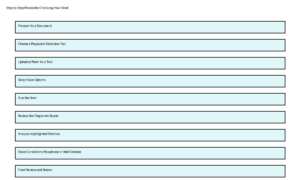
Diagram: Step-by-Step Process
Below is a visual representation of the step-by-step process for checking your work using plagiarism detection software.
Conclusion
Plagiarism detection software is no longer optional; it is a vital component of responsible writing in both academic and professional contexts. By following a step-by-step approach and using trusted tools such as PlagiarismSearch.com and PlagCheck.com, writers can ensure that their work is accurate, original, and ethically sound. From preparing your document and uploading it for scanning to reviewing reports and making necessary corrections, the process empowers writers to produce high-quality, credible content.
Maintaining originality not only protects your academic or professional reputation but also fosters a culture of integrity and trust in every sphere where written work matters. By incorporating plagiarism detection into your workflow, you are investing in the quality and authenticity of your writing, ensuring that your ideas are recognized as your own and contributing meaningfully to your field.